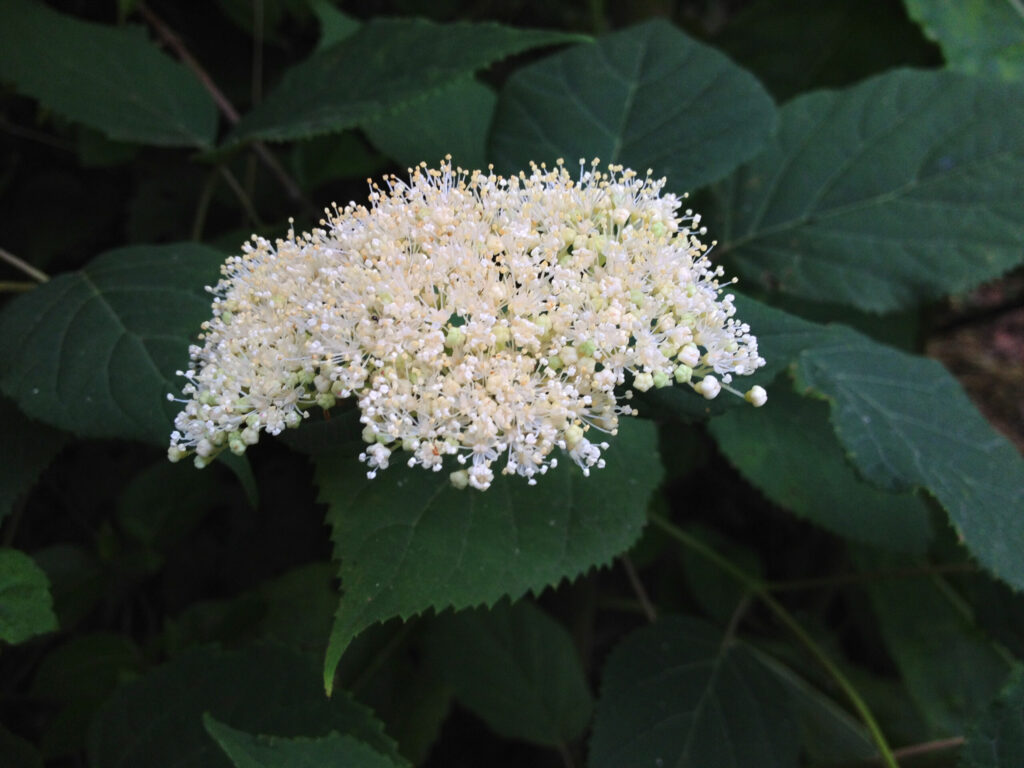
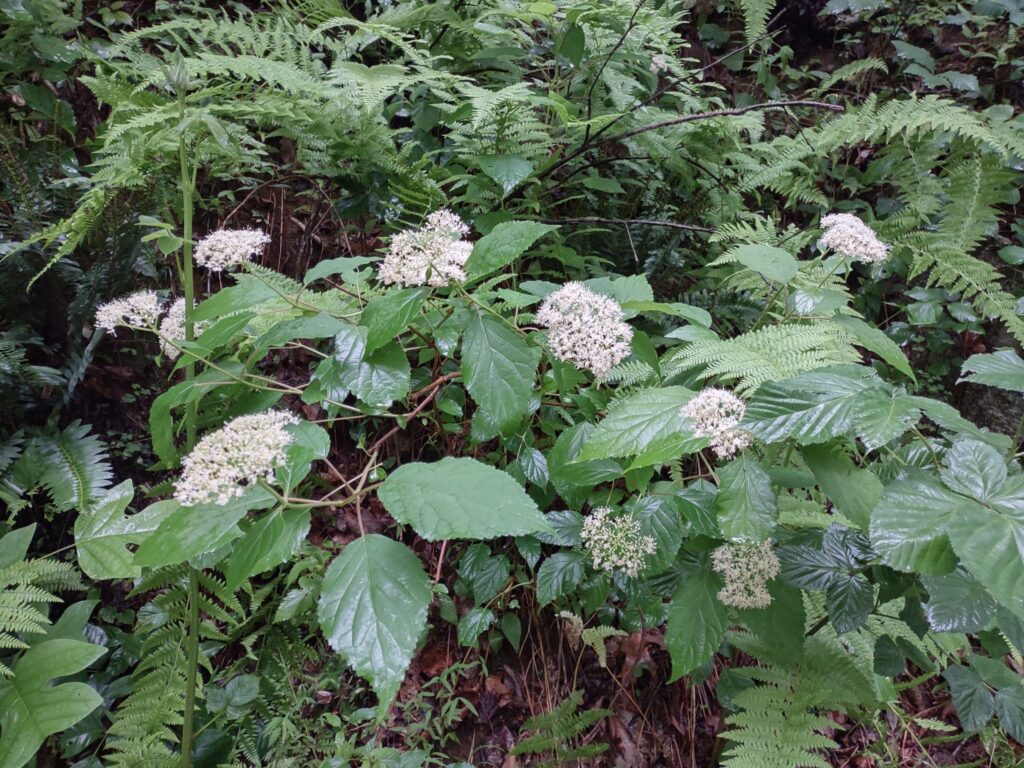
Look closely at smooth hydrangea and you’ll find a different kind of beauty: a gathering of tiny, fertile white flowers, sometimes edged with a few larger, showier sterile blossoms.
This is the straight species, Hydrangea arborescens—the wild relative of familiar garden selections such as ‘Annabelle’. Its flower clusters are flatter and less densely packed than those big white garden snowballs. [1]
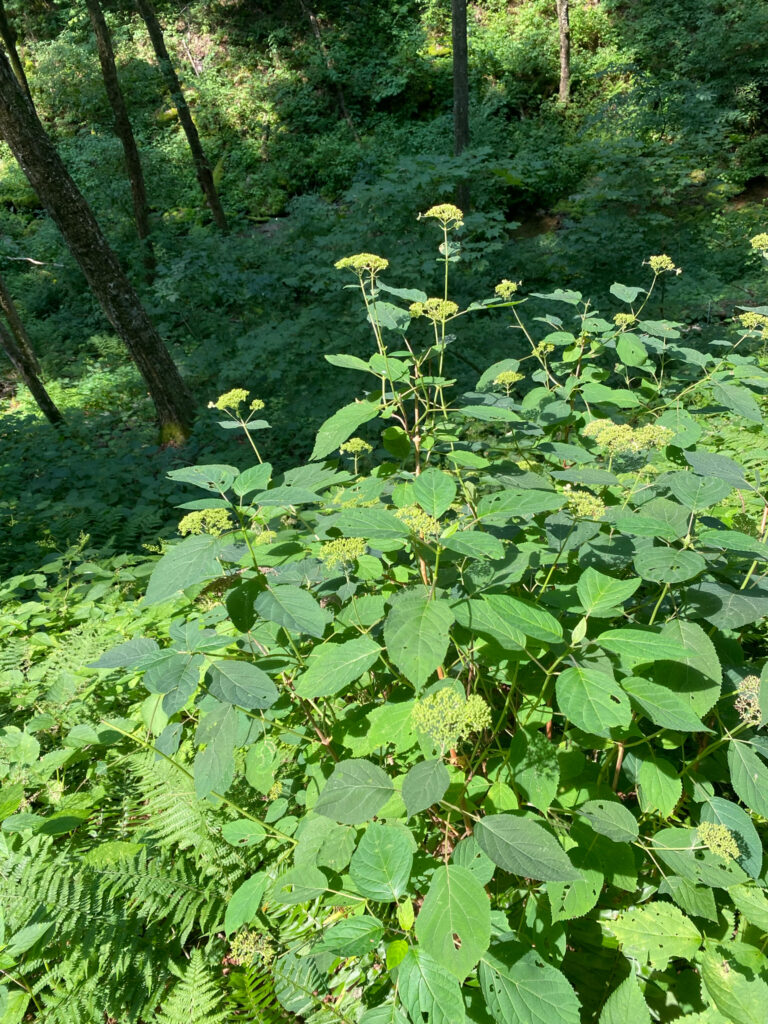
Native to the eastern United States, this deciduous shrub grows along wooded slopes, ravines and streambanks. In a garden, its modest stature—typically about three to five feet tall and wide—suits a woodland edge or a relaxed group beneath taller plants. The flowers attract pollinators, and its foliage supports the hydrangea sphinx moth. [1]
Give it moist, well-drained soil and partial shade. It flowers on the current season’s growth; remove weak or damaged stems in early spring. Its white flowers do not turn blue when the soil becomes more acidic. [1]