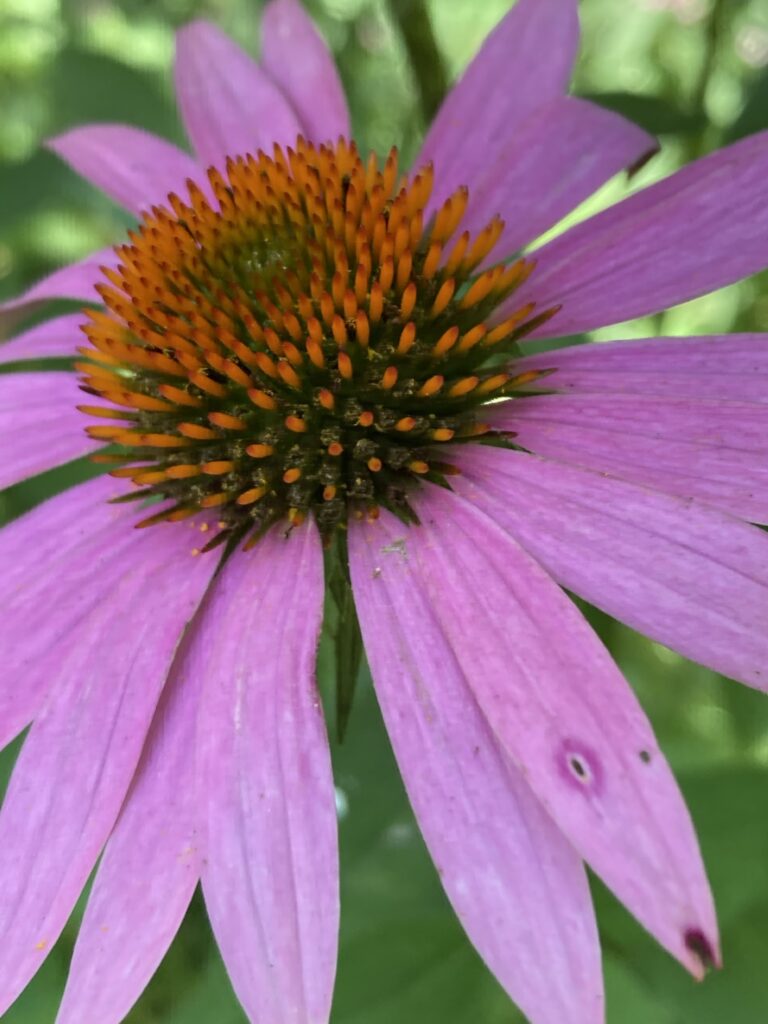
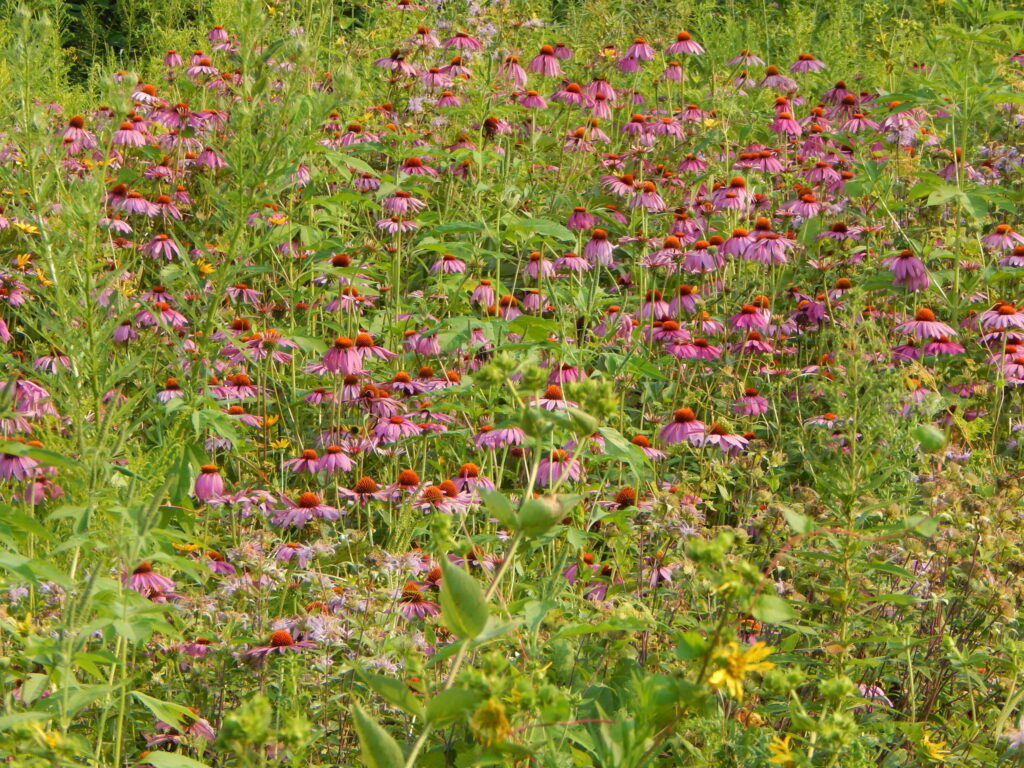
Purple coneflower wears its name on its sleeve.
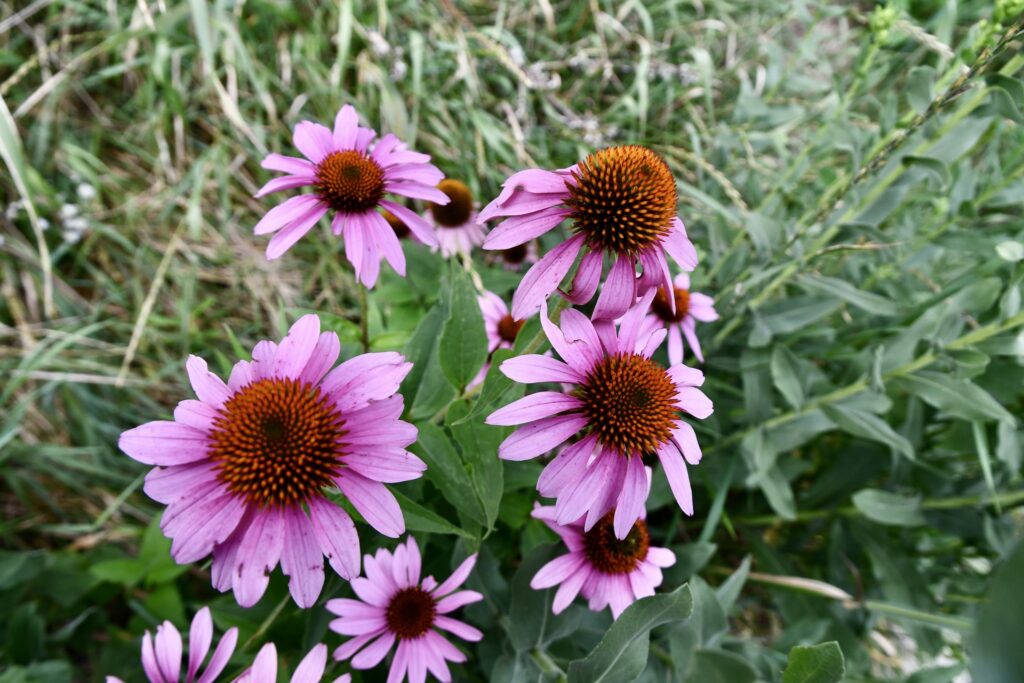
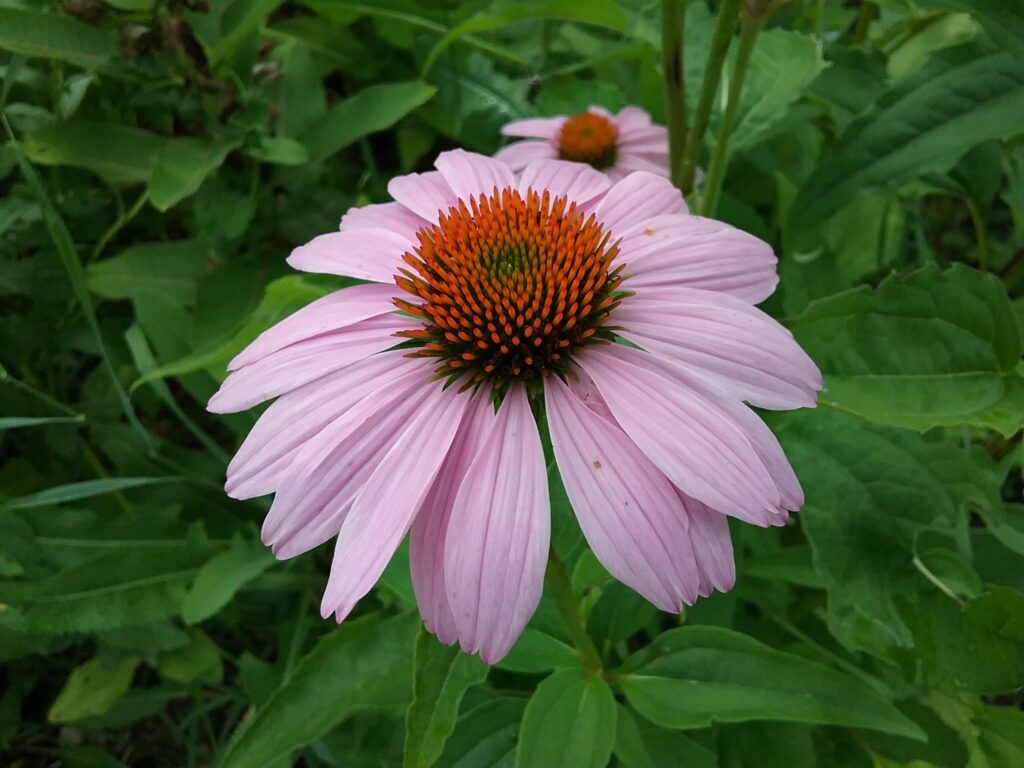
Echinacea comes from the Greek word for hedgehog, a nod to the stiff, spiny scales packed into the flower’s domed center. What looks like a single bloom is really a composite head: many tiny tubular disk florets in the cone, ringed by drooping, petal-like ray florets of pinkish purple. [1, 2]
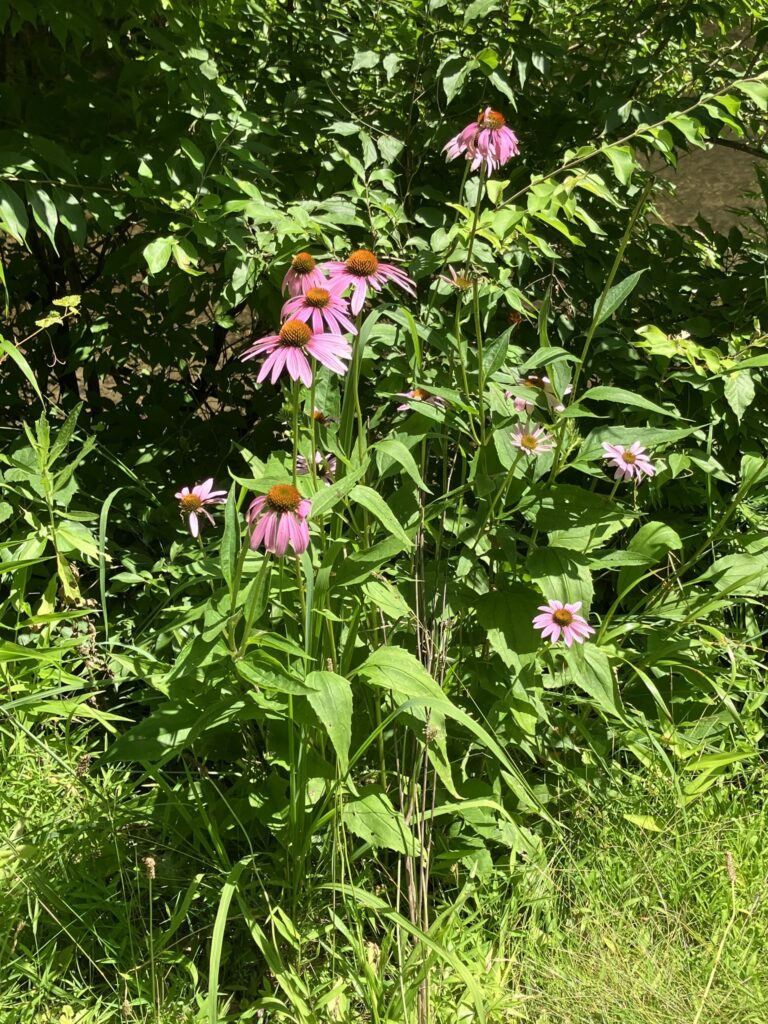
This herbaceous perennial is native to the central and eastern United States and grows about three to four feet tall. It flowers from early summer into mid-fall and is a favorite of bees and butterflies. Its leaves feed the caterpillars of the silvery checkerspot and wavy-lined emerald, and American goldfinches pick the seeds from spent cones. The Chicago Botanic Garden compared 52 coneflower selections side by side in its plant evaluation program. [1, 2]
Give it full sun to partial shade and moist, well-drained loam, though it adapts to many soils. Once established it tolerates drought, heat, humidity, salt and deer. Leave some seed heads standing for the birds. Cut dead stems back only to 12 to 24 inches and leave them standing: native bees nest in the hollow stems. [1]