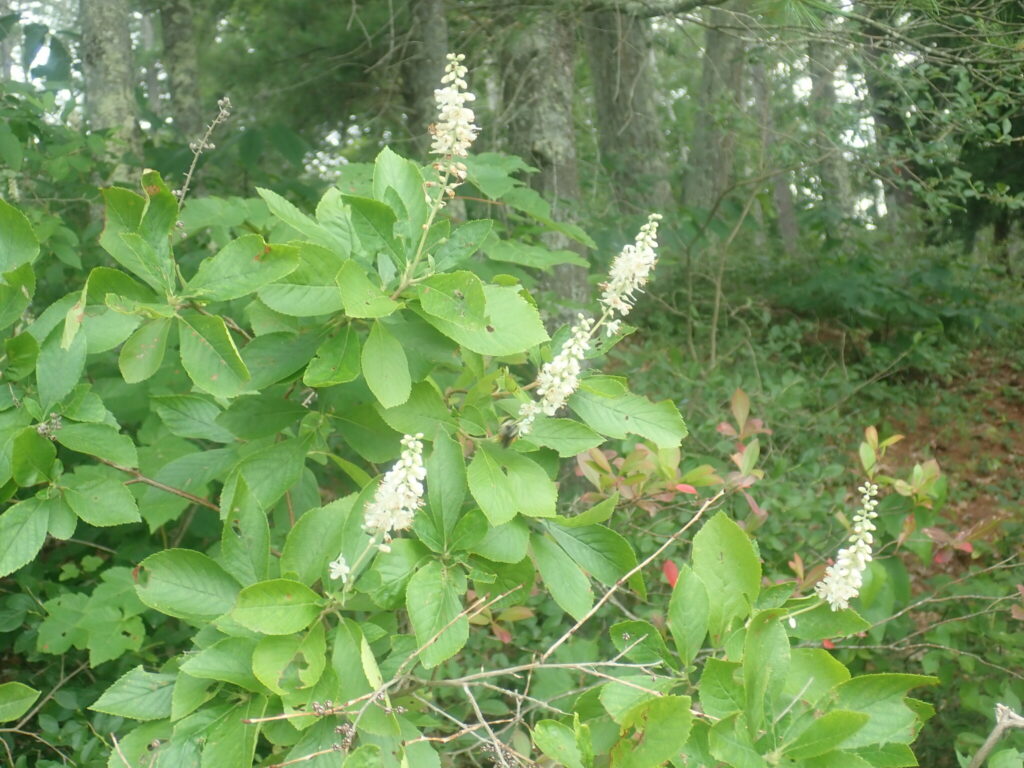
Summersweet blooms when most shrubs have finished.
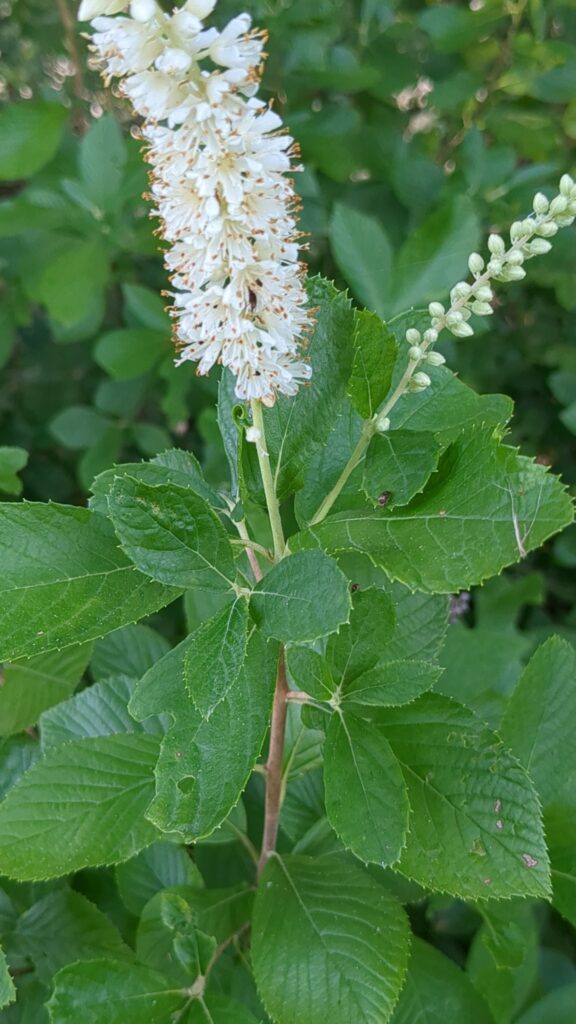
In late summer it sends up slender, three- to six-inch spikes of tiny, strongly fragrant white flowers, and it does so even in shady spots. Its botanical name nods to its alder-like leaves: klethra is the Greek name for alder, and alnifolia means leaves like an alder. It is also called coastal sweet-pepperbush. [1, 2]
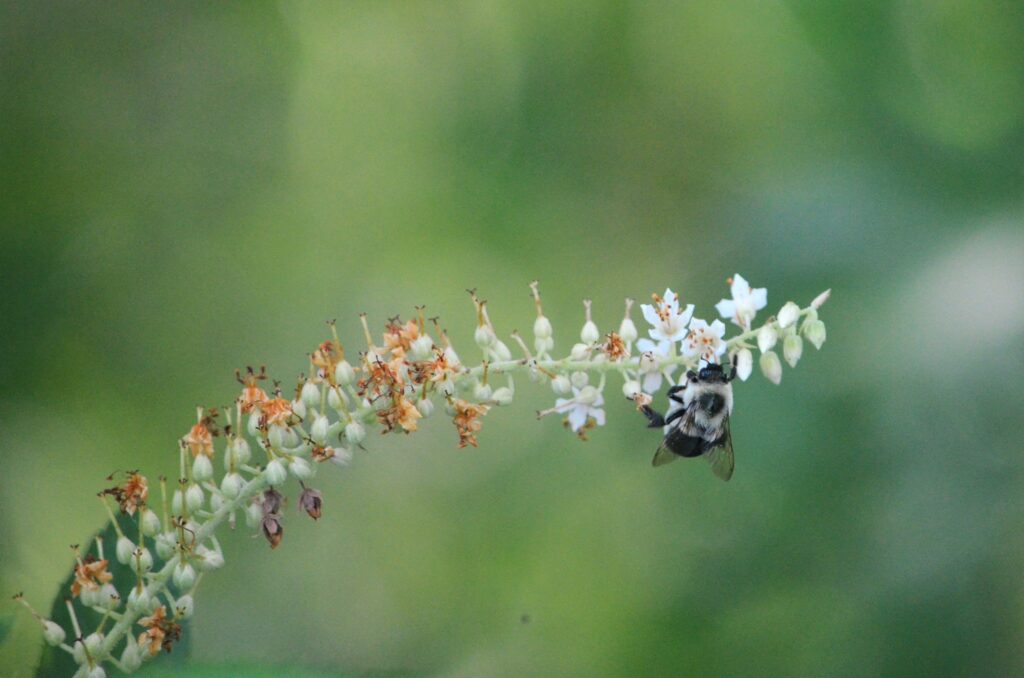
This deciduous shrub is native from Maine to Florida and west to Texas, growing wild in swamps, damp thickets and sandy woods. It produces high-quality nectar and pollen for hummingbirds, butterflies and bees, and its dry seed capsules feed birds through winter. In good conditions it suckers into small thickets. [1]
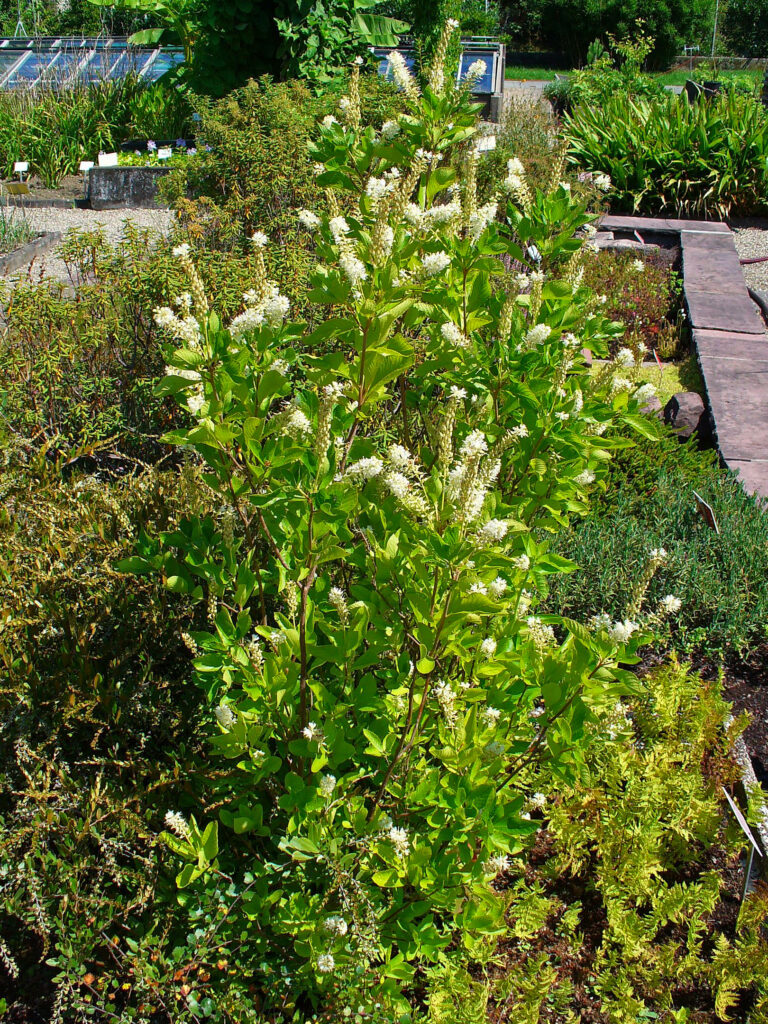
Plant it in moist to wet, acidic soil rich in organic matter, in full sun or partial shade; it will not take a hot, dry site. Once established it tolerates brief drought and flooding, as well as shade and clay. It flowers on new growth, so prune in late winter or early spring, and pull suckers if you want a tidier shape. Use it as a screen, a specimen or a fragrant border plant. [1, 2]