
Every Franklin tree alive today descends from plants the Bartram family collected in colonial Georgia.
John and William Bartram first came upon the tree on October 1, 1765, on the Altamaha River in southeast Georgia, near Fort Barrington. [5a] In 1776 William returned to the remaining wild population expressly to collect seed [5b], and he brought it to his father’s garden in Philadelphia in January 1777. [5c] It was named in honor of Benjamin Franklin. [5d] The tree was last verified in the wild in 1803, [3b] and it has been extinct in the wild since the early 19th century. [3a] All Franklinia today come from seeds and stems collected by the Bartrams and grown at their garden in West Philadelphia. [4a]
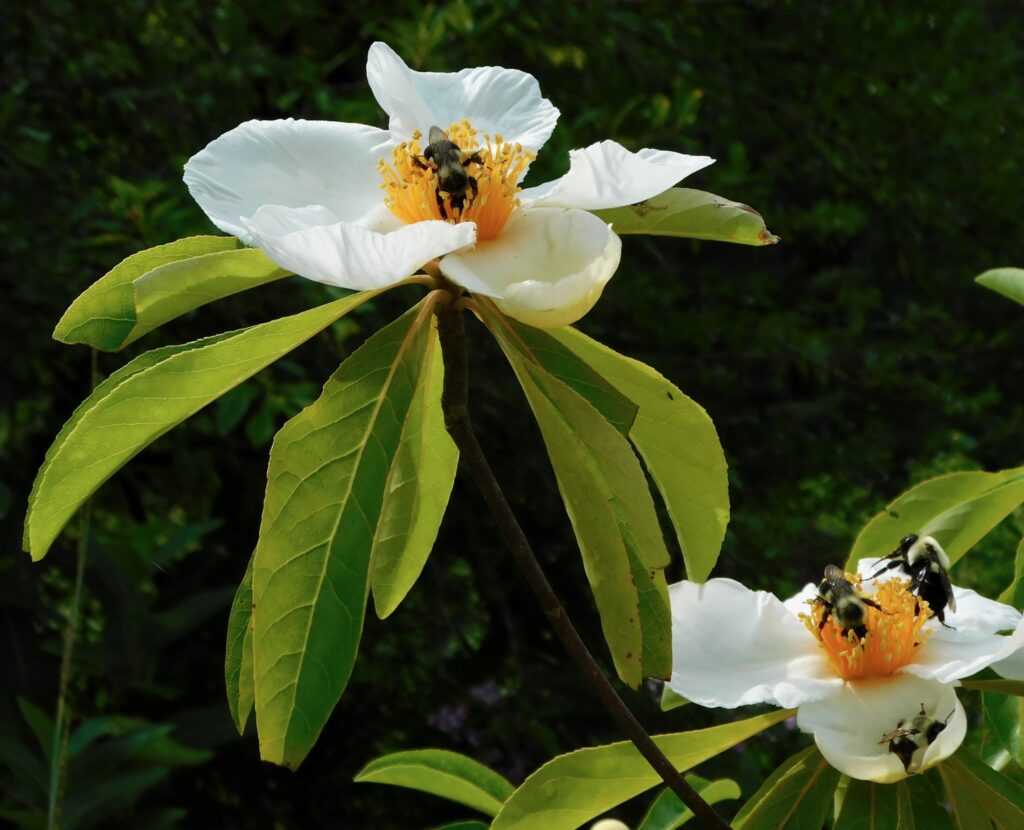
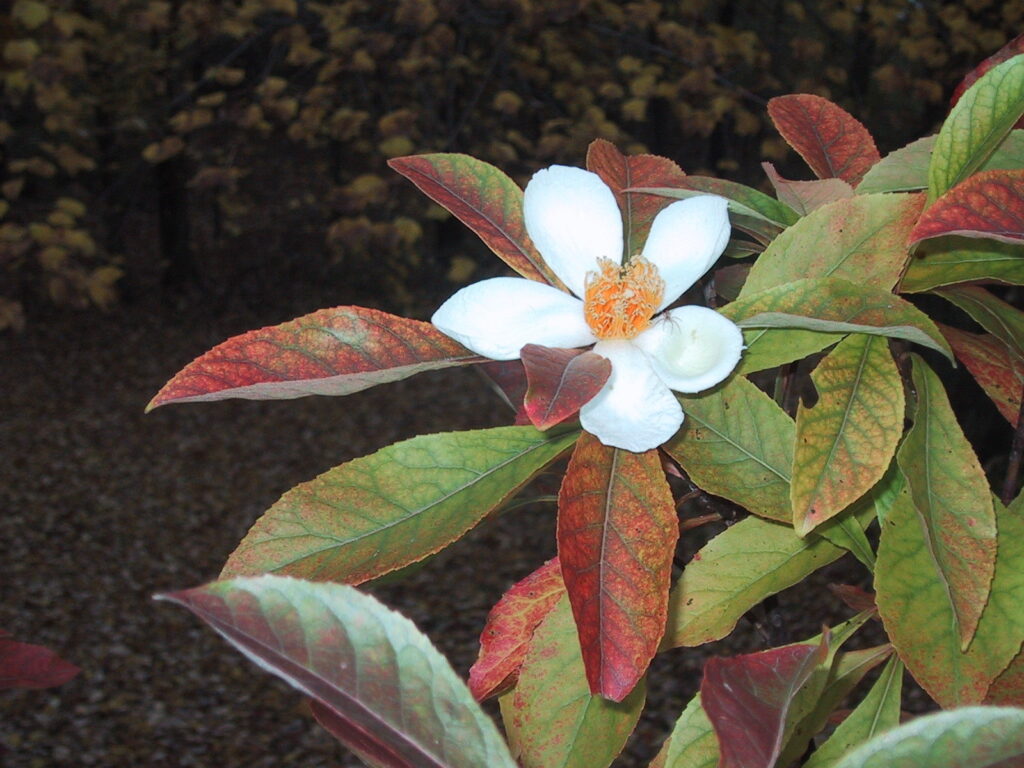
Franklin tree is a small flowering tree in the tea family, usually with a single trunk and an airy, rounded crown, [1a] typically reaching about 25 feet tall and 15 feet wide. [1b] It blooms from midsummer until the first frost with large, fragrant white flowers, [1c] and gardeners prize its Camellia-like blooms and bright fall color. [3c]
It has a reputation for being difficult to grow. [1f] Give it full sun with some afternoon shade in summer, and acidic soil that is moist and well drained. [1d] Avoid ground where cotton has grown, since a cotton pathogen also attacks Franklin trees. [1e]
At Bartram’s Garden in Philadelphia, Franklinia is the signature tree [5e] and blooms in the Common Flower Garden by the historic Bartram House. [2c]