

White oak is the patient giant of eastern forests, a tree planted for great-grandchildren.
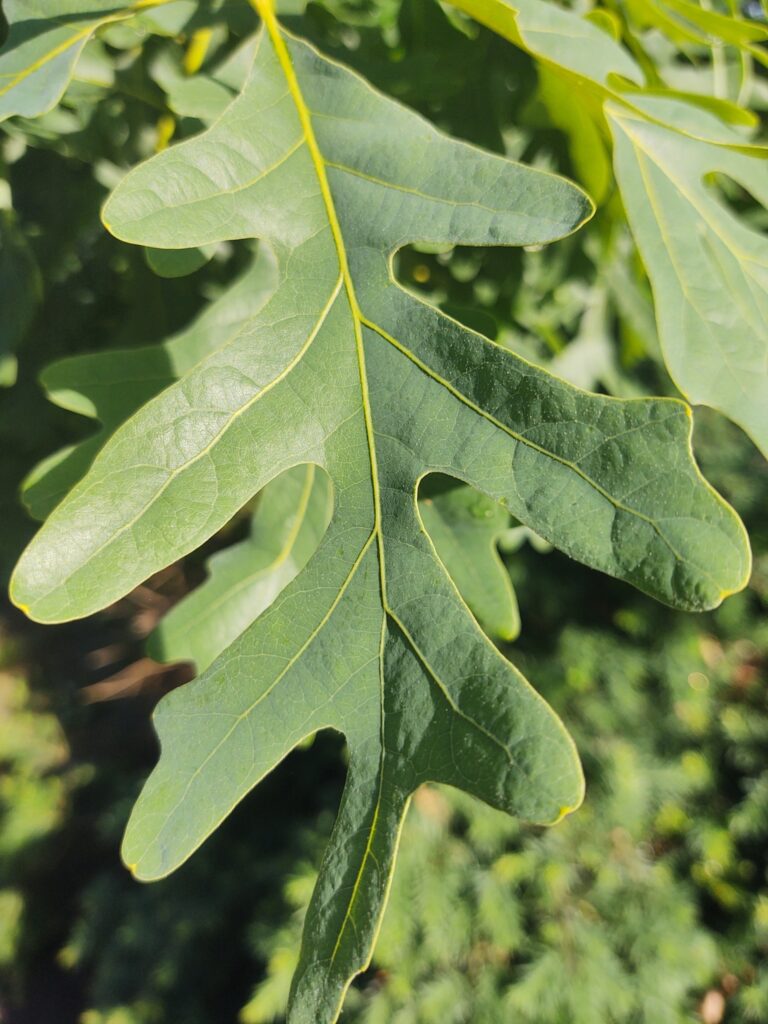
Native to the eastern United States, white oak grows in forests on dry slopes, in valleys and in ravines. [1a] This slow-growing hardwood can reach 135 feet but generally tops out at 80 to 100 feet. [1b] Look for its fingerlike lobed leaves with rounded tips and no bristles. [1d] Despite its name, the bark is ash-gray. [4a] “White” refers to the color of the finished wood, not the bark. [1c]
White oak may live 200 to 300 years, with some even older specimens known. [2a] Maryland’s famous Wye Oak was estimated to be over 450 years old when it fell in a thunderstorm in 2002. [2b] Connecticut’s Charter Oak of Hartford is one of the most famous white oaks in America, [2f] and Illinois schoolchildren voted white oak their official state tree. [2e]
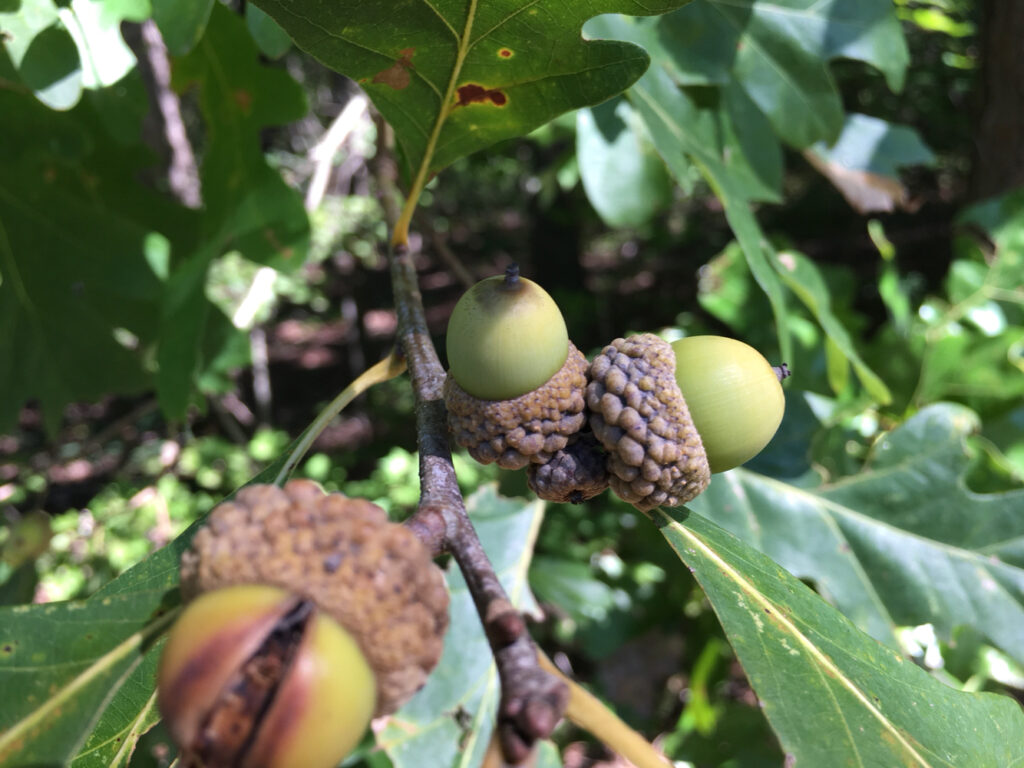
This long-lived tree is a prolific supporter of wildlife. [1e] White oak supports a wide variety of butterflies and moths, small mammals and songbirds, [1f] and its acorns feed turkeys, wood ducks, jays, woodpeckers, squirrels, deer and black bears. [2c] Its watertight wood is what coopers use for wine and whiskey barrels. [2d]
Plant white oak in full sun to part shade in deep, moist, well-drained, slightly acidic soil; once established it is fairly drought tolerant. [1g] Choose the spot carefully: the deep taproot makes it hard to transplant, [1h] and its eventual size means it should not go near buildings or pavement. [1i]
At Mountain Top Arboretum in Tannersville, New York, the white oak was planted in 1993 as a single acorn by the arboretum’s founders. [3a]