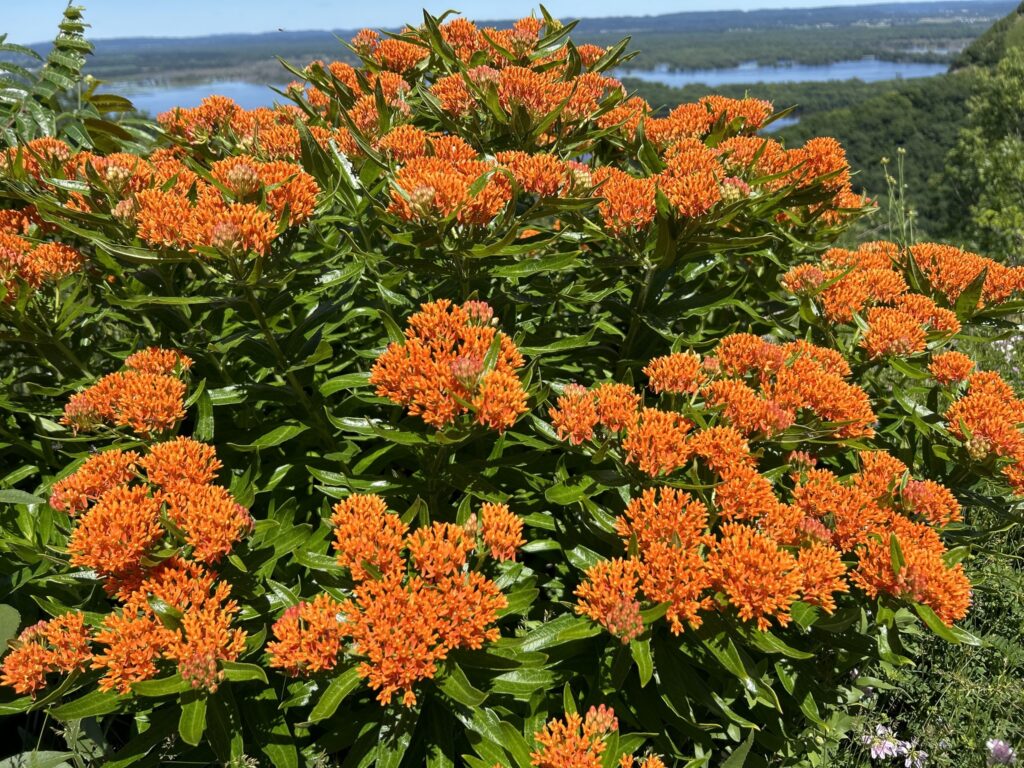
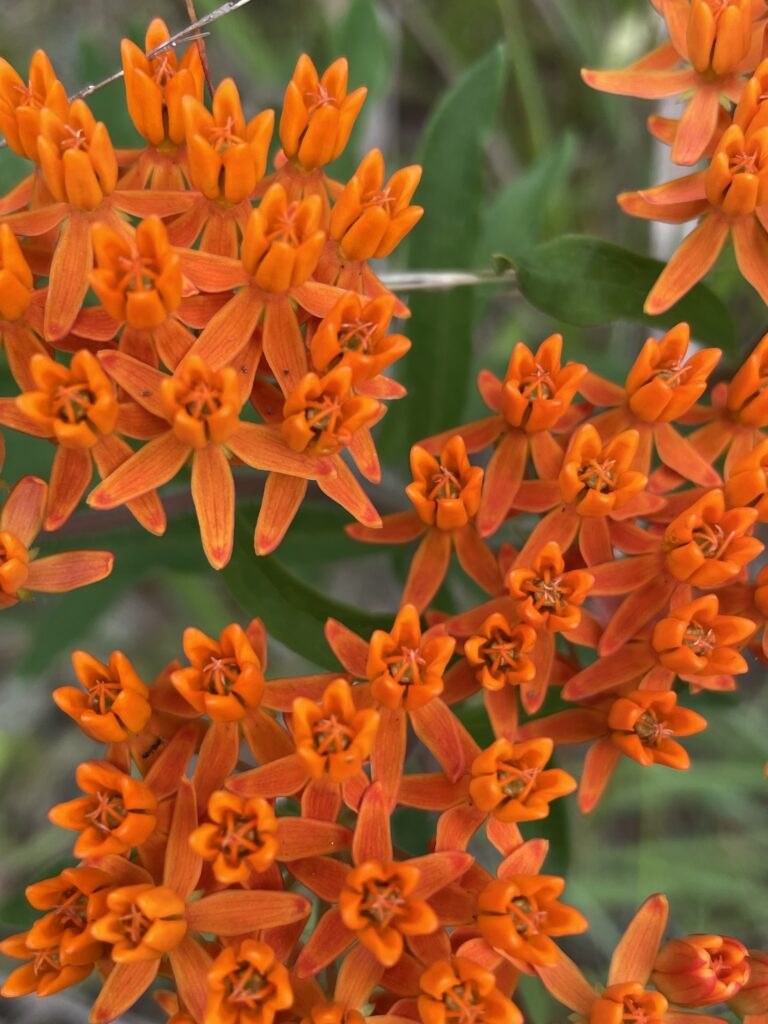
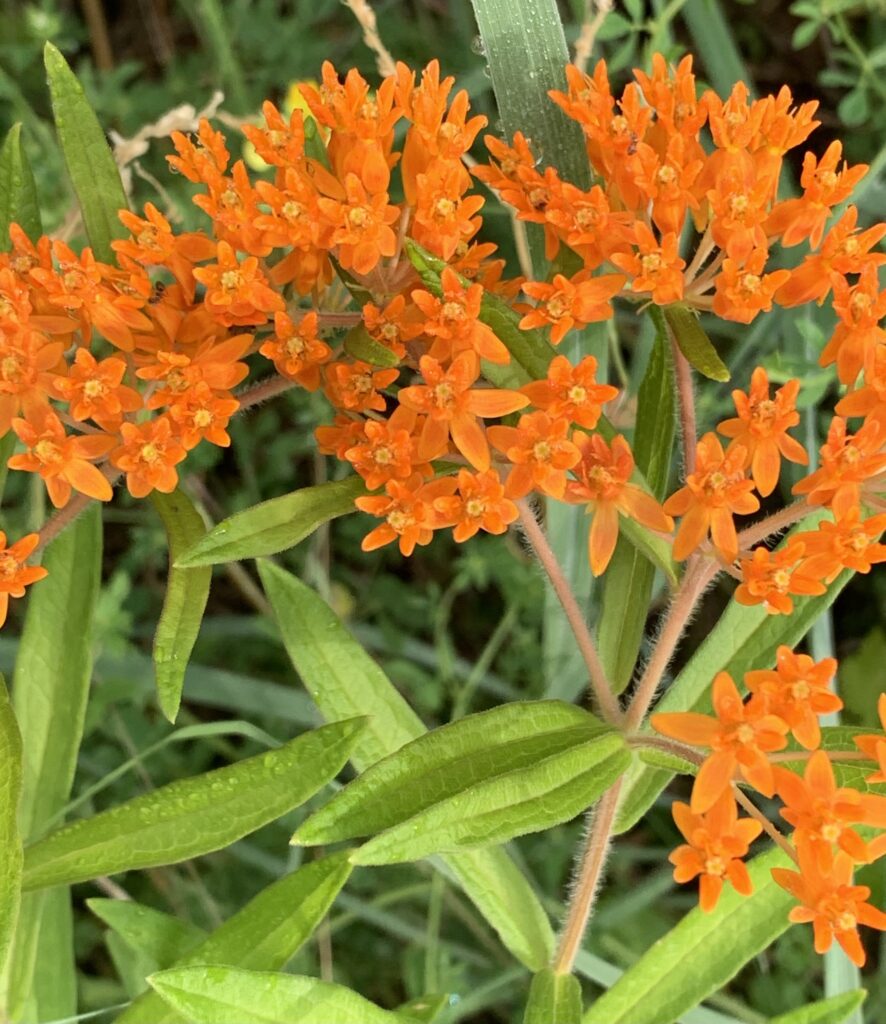
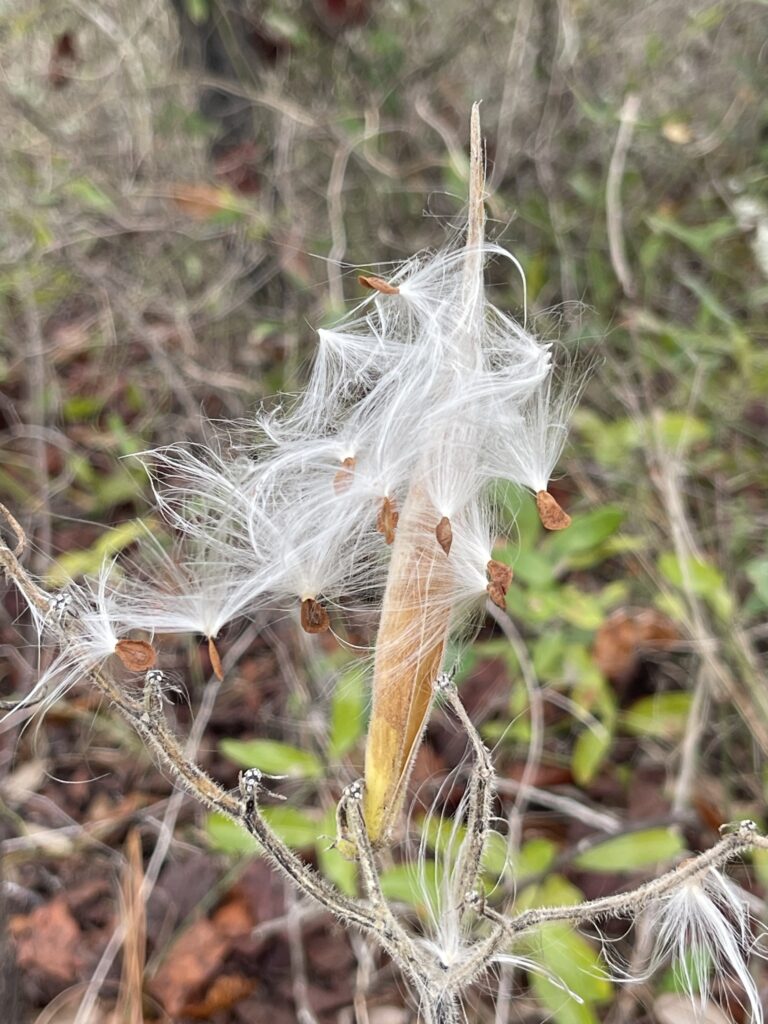
Butterfly weed is a milkweed that blazes.
Flat-topped clusters of bright orange to yellow-orange flowers crown its stems in summer, and every bloom carries the little hoods and horns typical of milkweeds. Unlike most of its relatives, its sap is clear rather than milky. [1]
It grows wild in dry, rocky open woods, glades, prairies, fields and roadsides across eastern and southern North America and into Mexico. Its species name, tuberosa, refers to its tuberous roots. Plants form upright clumps one to three feet tall. The flowers draw many butterflies, and the leaves feed the caterpillars of the monarch, queen and gray hairstreak butterflies and the milkweed tussock moth. The Perennial Plant Association named it Perennial Plant of the Year for 2017. [1]
Give it full sun and average to dry, well-drained soil; it thrives where many plants struggle and tolerates drought and some salt. Be patient: seedlings may take two to three years to bloom. A deep taproot makes it hard to move, so choose its spot carefully. Wear gloves when handling it, since the sap can irritate skin. At Myriad Botanical Gardens in Oklahoma City, where it is a native wildflower, it grows in the prairie and waterwise gardens. [1, 2]