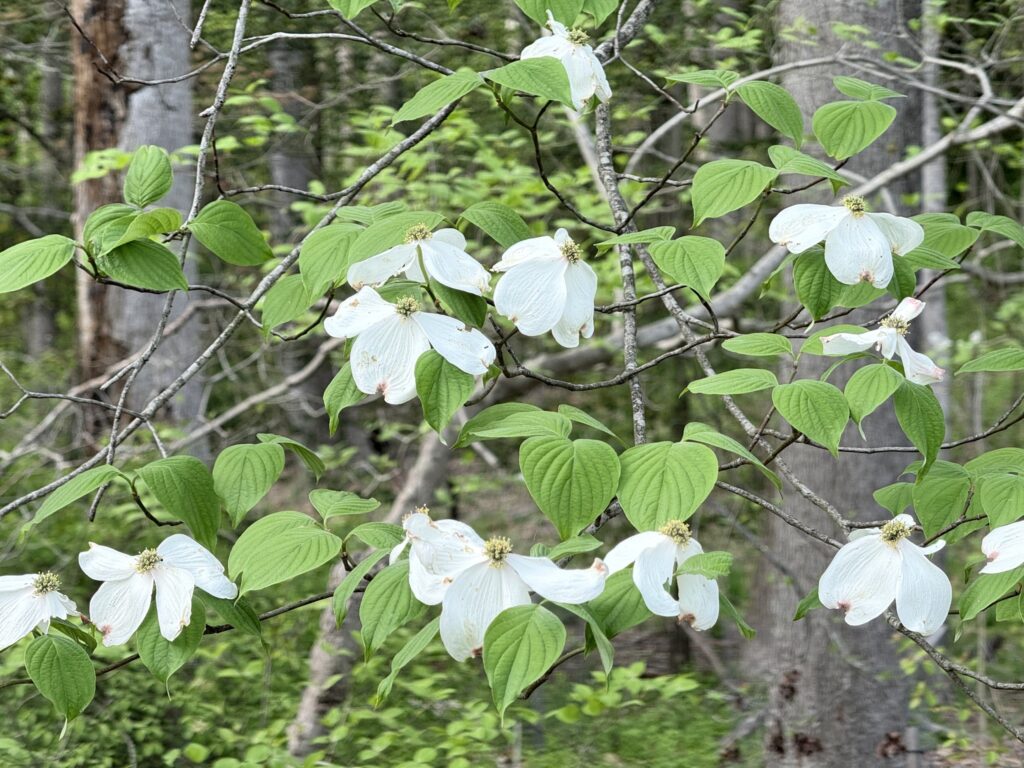
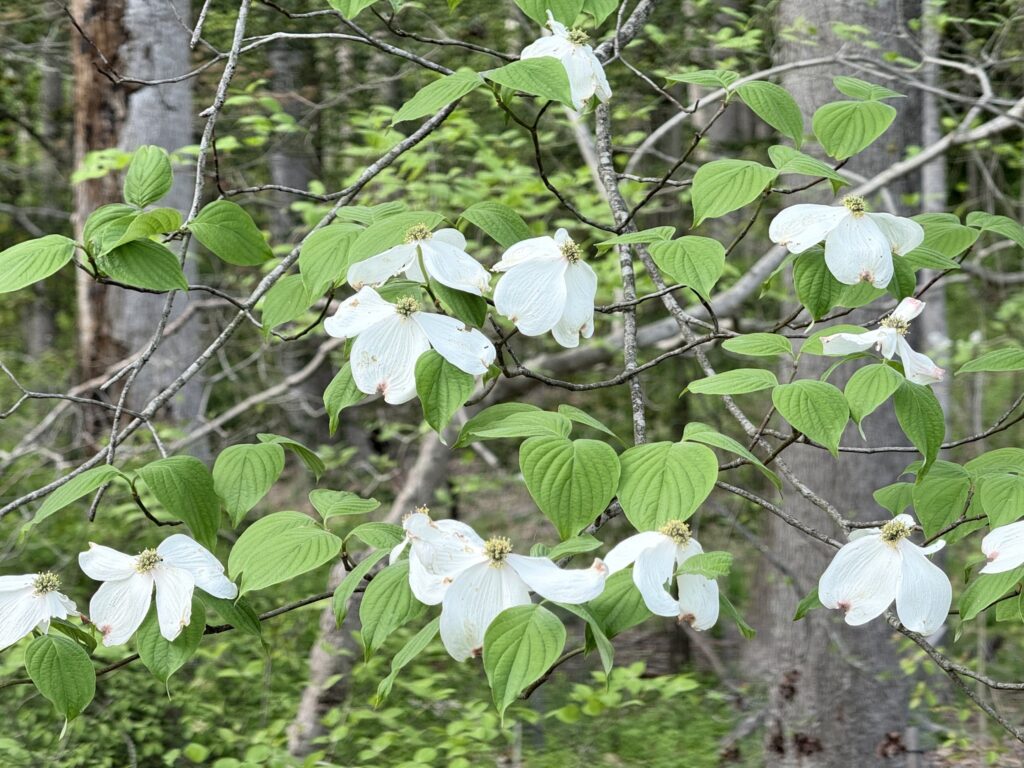


Each spring, flowering dogwood lights up the edges of eastern woodlands with tiers of white blossoms.
This small understory tree grows wild from southeastern Canada through eastern North America to eastern Mexico, most often along woodland margins. [1a] It usually reaches 15 to 25 feet. [1b] What looks like a single big flower is really a tight cluster of tiny true flowers ringed by four petal-like bracts. [1c] Trees bloom in early April in the South and as late as early May farther north and in the mountains. [2a]
Butterflies and specialized bees visit the flowers, and the red fruits feed songbirds and other wildlife from fall through winter. [1e] Dozens of bird species eat the fruit and carry the seeds away. [2b] The hard wood was once turned into textile shuttles, spools and tool handles. [1f]
Flowering dogwood is the state flower of North Carolina [1d] and the state tree and flower of Virginia. [2c] It grows best in well-drained soil rich in organic matter, with a slightly acidic to neutral pH. [1g] A fungal disease, dogwood anthracnose, has killed many wild dogwoods. [2d]
At Cheekwood in Nashville, the Carell Dogwood Garden displays just over 300 dogwoods of 14 species, including 23 varieties of flowering dogwood. [3a]