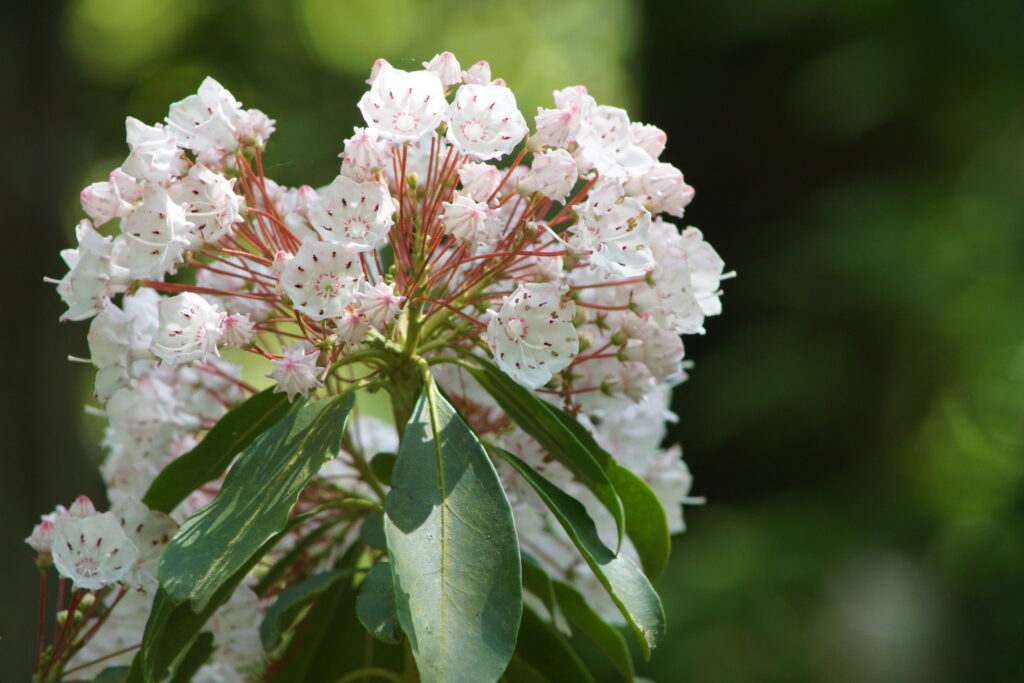
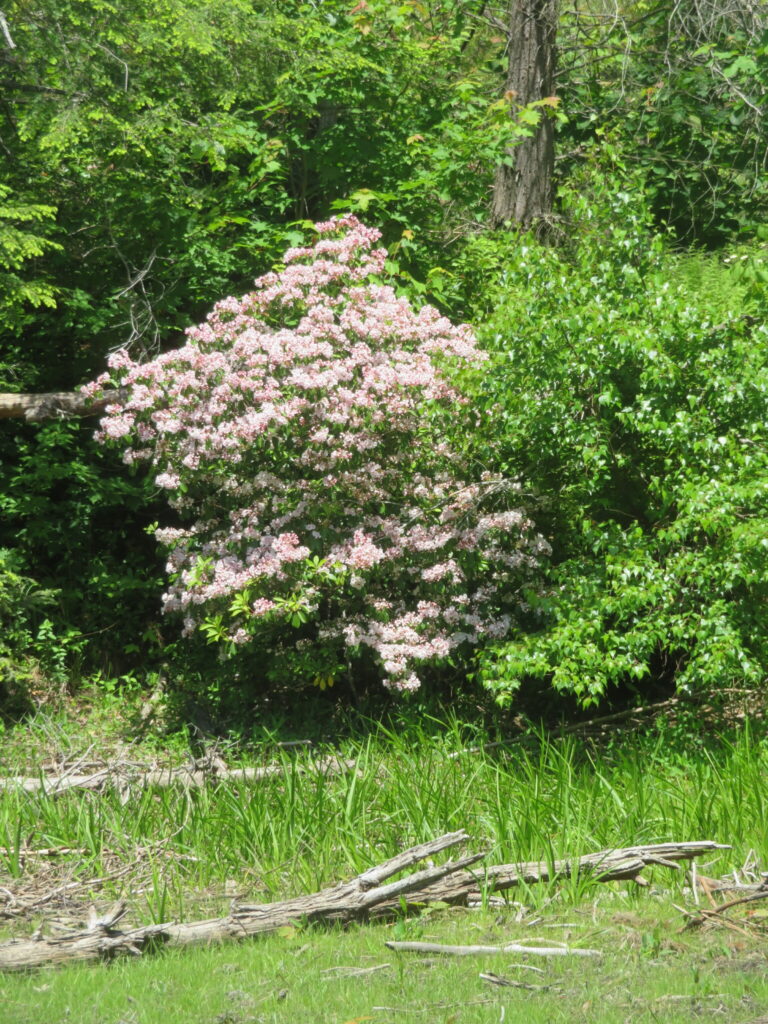
Each mountain laurel flower is a tiny, spring-loaded machine.
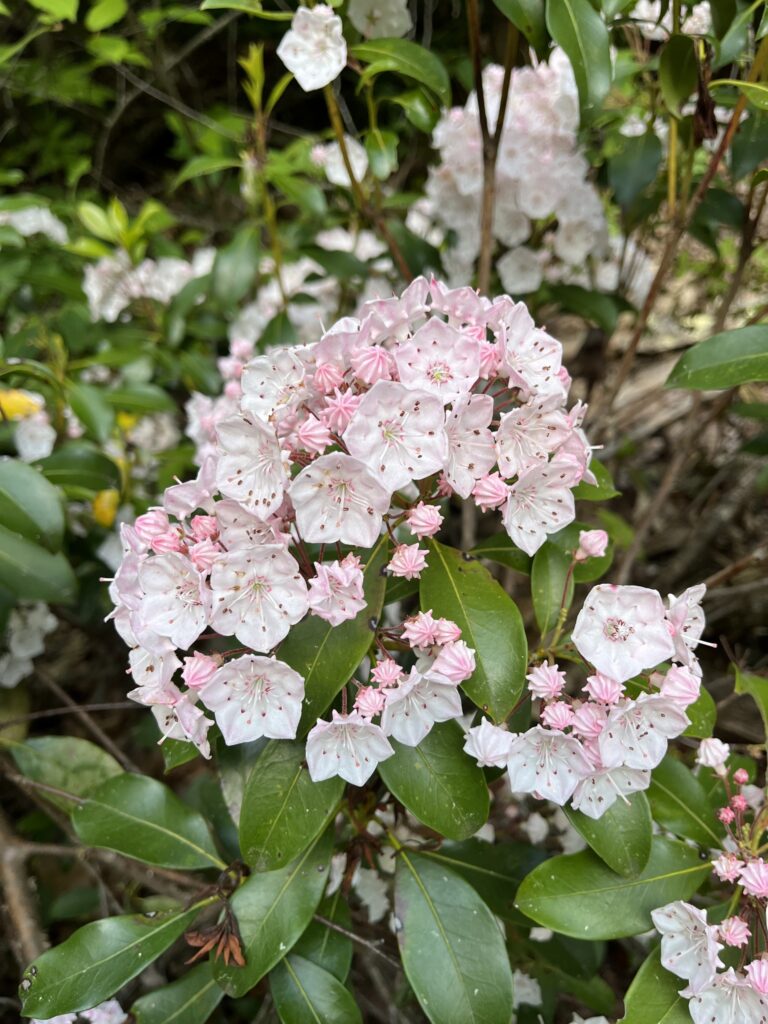
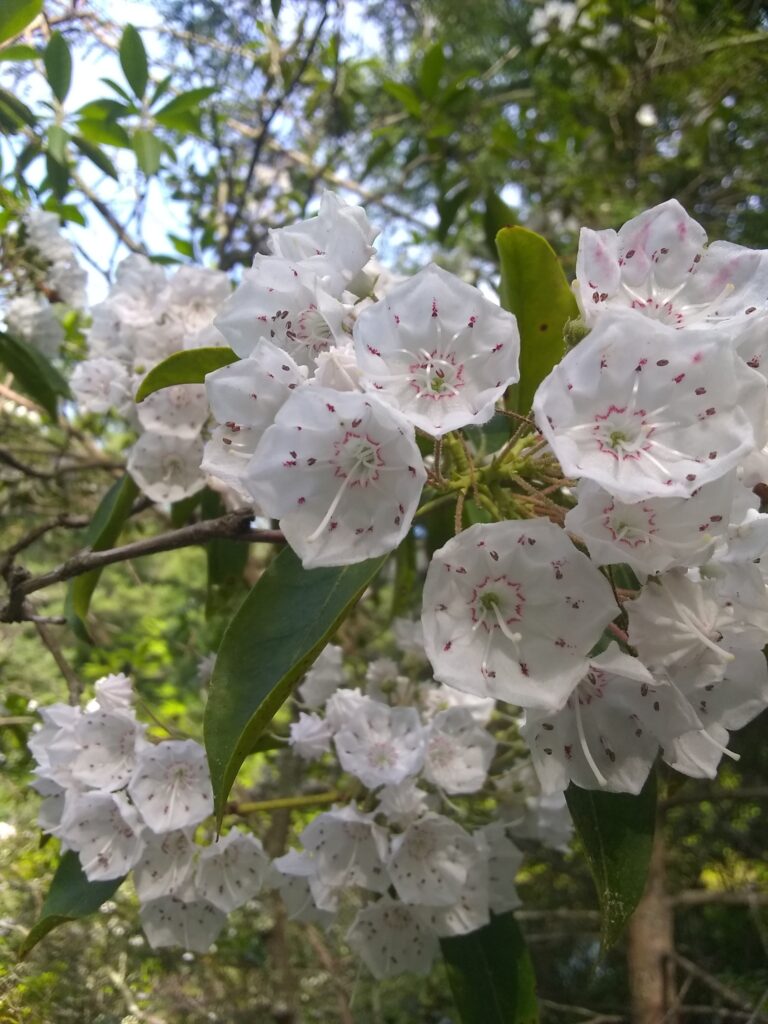
The ten anthers sit tucked into pockets in the cup-shaped petals; when a bee lands, the bent filaments snap free and dust it with pollen. In late spring the evergreen shrub covers itself in clusters of these bell-shaped flowers, marked inside with purple. [1]
Mountain laurel is a broadleaf evergreen in the blueberry family, native to eastern North America in rocky woods, mountain slopes, balds and acidic forests. Linnaeus named the genus for Peter Kalm, a Swedish botanist who explored eastern North America in the 1740s. It is Connecticut’s state flower, and Highstead in Redding, Connecticut, keeps a comprehensive collection of the species and serves as the international registration authority for Kalmia cultivar names. [1, 2, 3]
Grow it in partial shade in cool, moist, acidic, humus-rich, well-drained soil; it dislikes heavy clay and wet ground. Mulch keeps its roots cool. Next year’s flowers form on old growth, so deadhead and prune lightly right after bloom. The plant is poisonous and highly flammable, so keep it out of the space immediately around a house. [1]