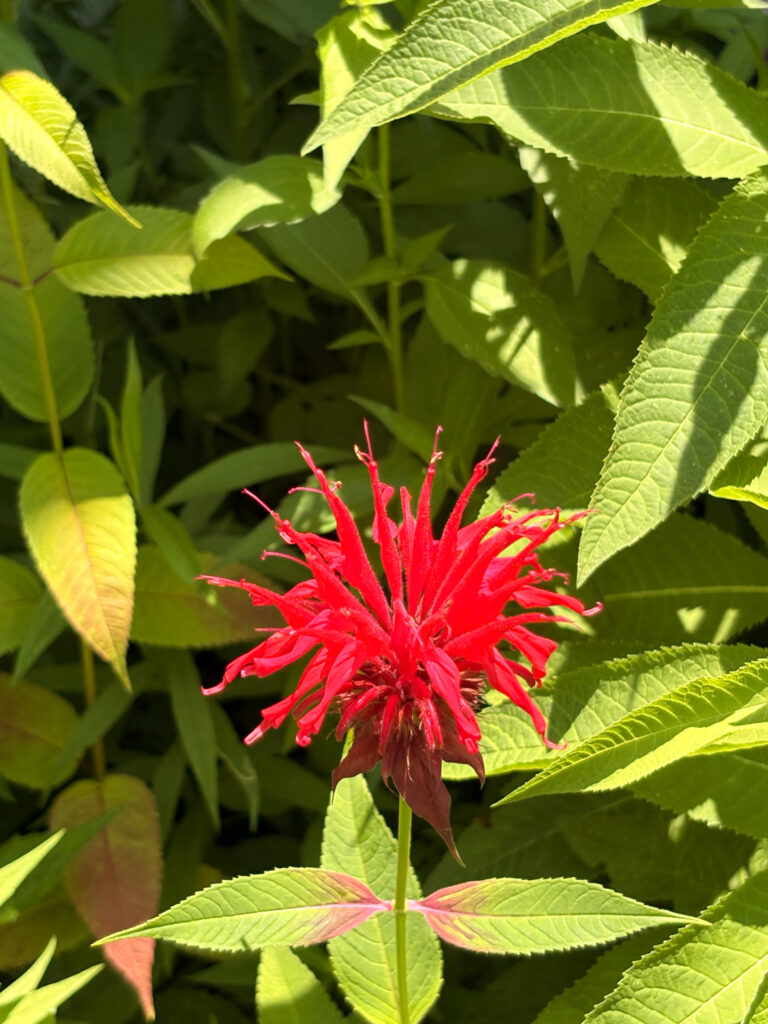
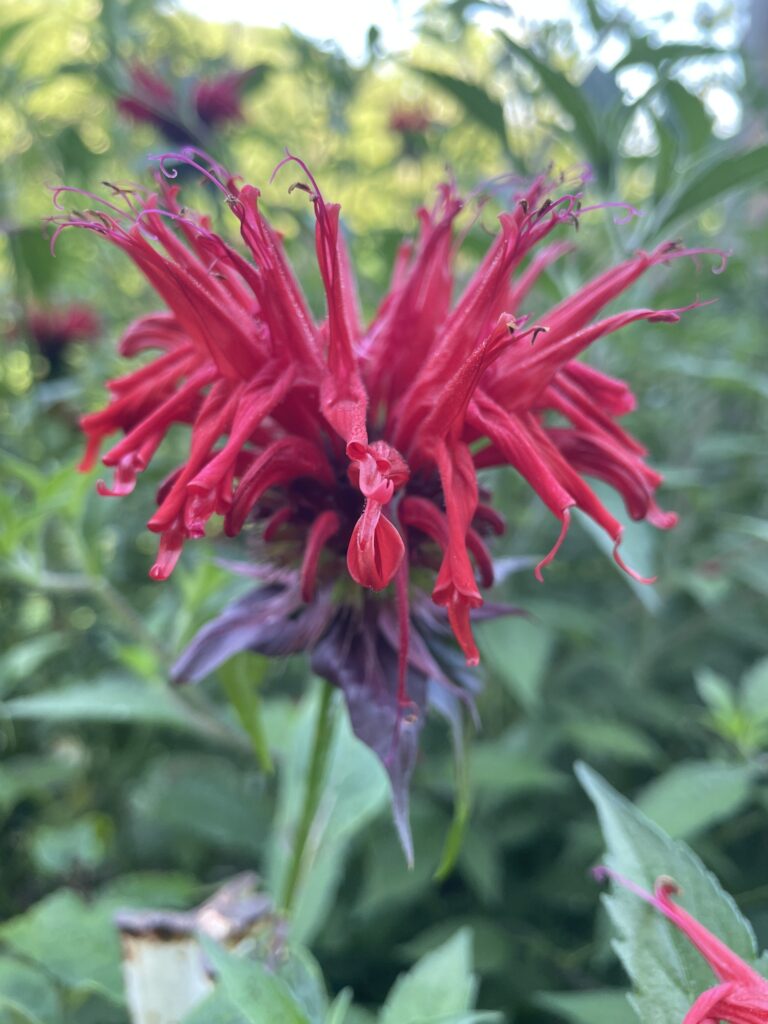
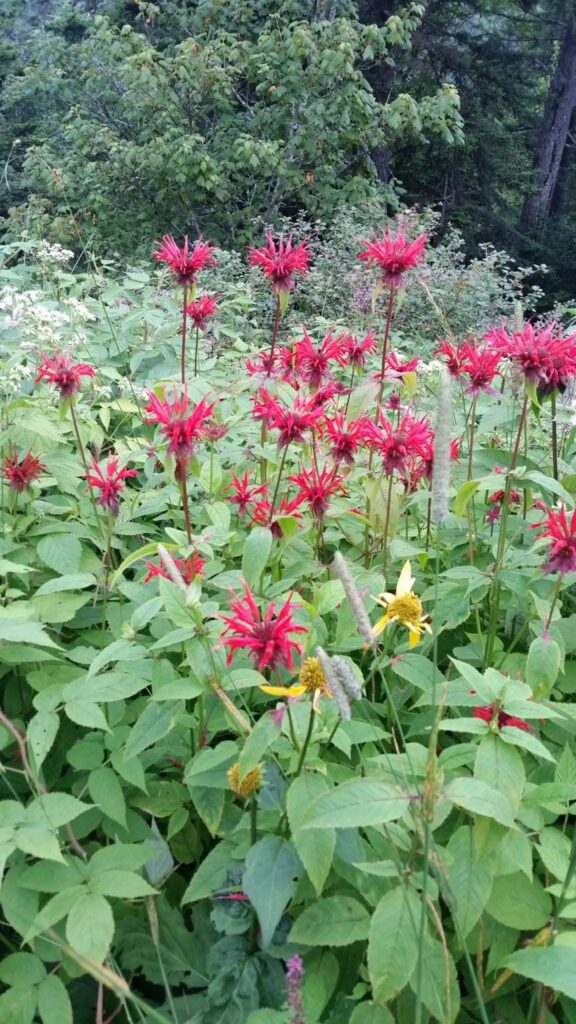
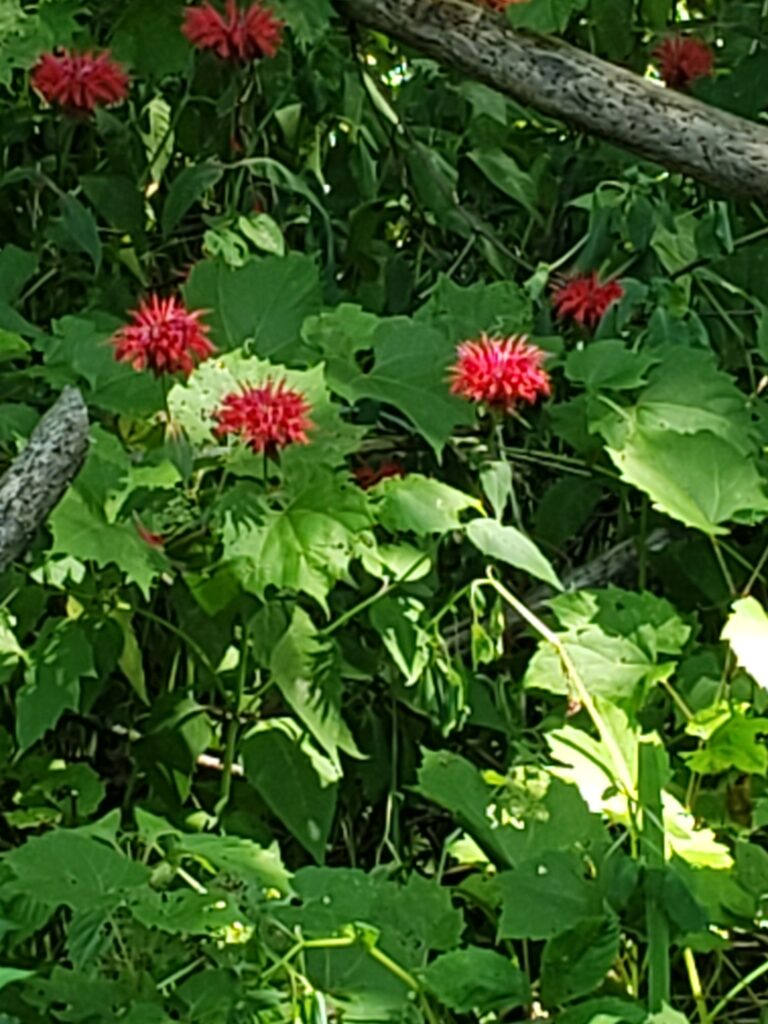
Scarlet bee balm looks like a burst of fireworks: whorls of slender, two-lipped red flowers held in dense clusters on square stems.
Crush a leaf and you’ll smell why it belongs to the mint family. Its species name, didyma, means paired, after flowers that mature in twos on either side of the stem. [1]
Native to the mountains of North Carolina and throughout the Appalachians, it blooms along the Blue Ridge Parkway in summer. It reaches about four feet and spreads by underground runners. Bumblebees, swallowtail butterflies and ruby-throated hummingbirds visit the flowers, and the flowers are edible. In Mt. Cuba Center’s bee balm trial in Delaware, the straight species struggled with powdery mildew and few flowers, while its selection ‘Jacob Cline’, growing right beside it, was far more vigorous and floriferous. [1, 2]
Plant it in moist, well-drained soil in full sun; it tolerates some shade. Avoid overhead watering to limit powdery mildew. Cut dead stems back only to 12 to 24 inches and leave them standing: native bees nest in the hollow stems. [1, 2]