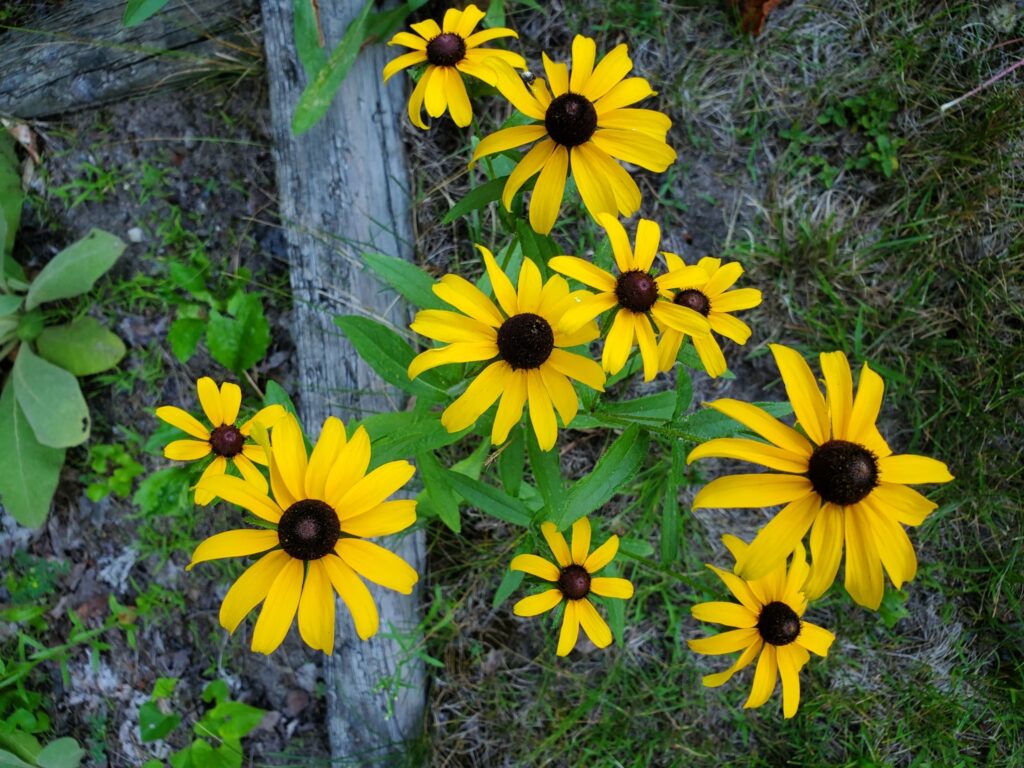
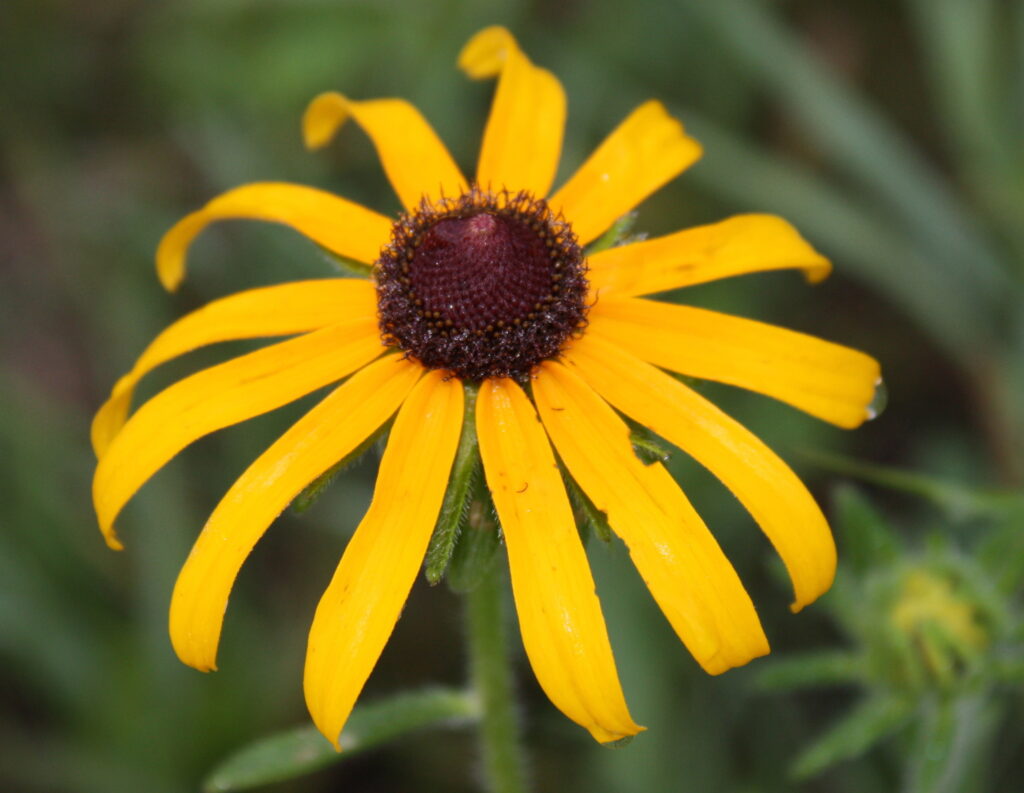
Few wildflowers say summer quite like black-eyed Susan: bright golden-yellow rays around a domed, chocolate-brown center.
Look closely at the stems and leaves and you’ll see the short, stiff hairs behind its species name, hirta, which means hairy. [1, 2]
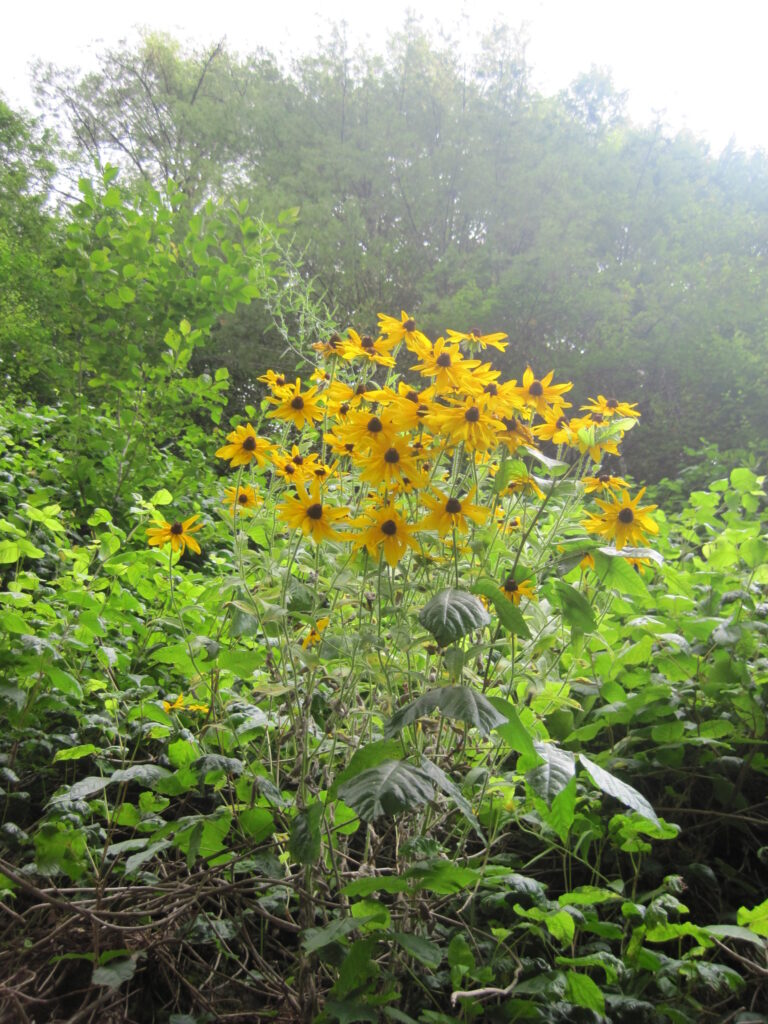
Native to the eastern United States, it is a fast-growing biennial or short-lived perennial. It often blooms in its first year from an early spring sowing, so many gardeners take it for an annual. Plants reach two to four feet tall and flower from midsummer into fall, longer with deadheading. Pollinators visit the flowers, its leaves feed the caterpillars of the wavy-lined emerald and silvery checkerspot, and goldfinches eat the seeds in fall. [1]
Grow it in full sun to partial shade, in moist, well-drained clay, loam or sand. Moderate fertility gives the best show, so keep it away from lawn edges where fertilizer can push leafy growth. It self-sows freely, tolerates some salt, deer and drought, and is happy on a bank, in a meadow or in a pollinator border. Related cultivars are commonly called gloriosa daisies. [1, 2]