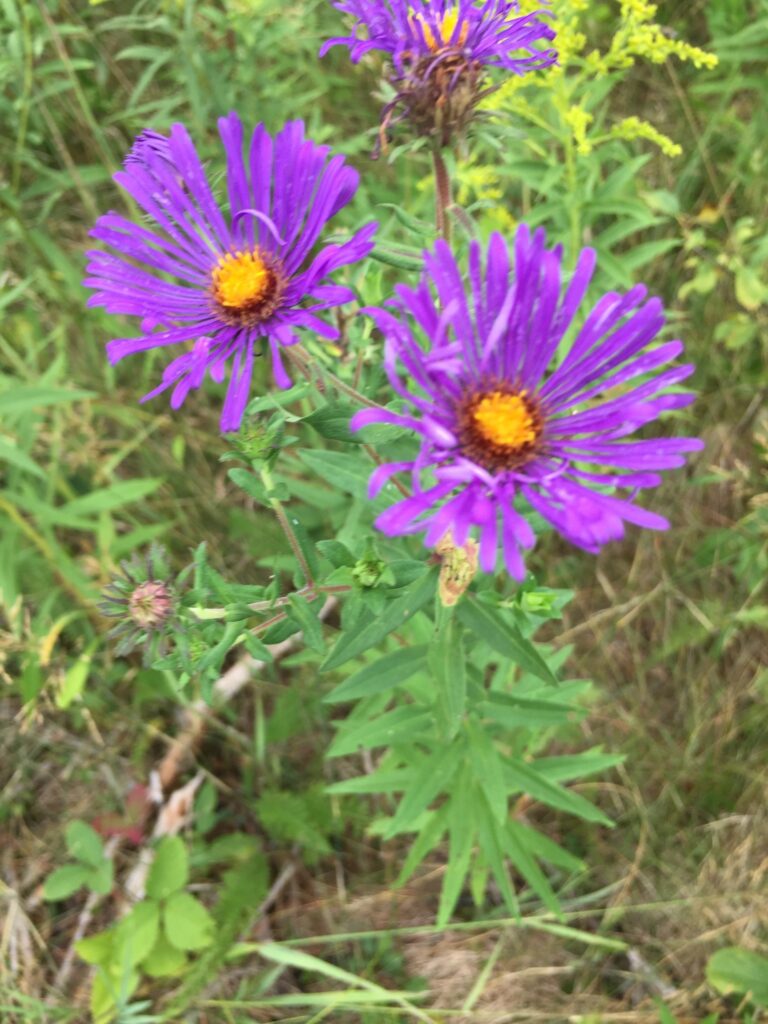
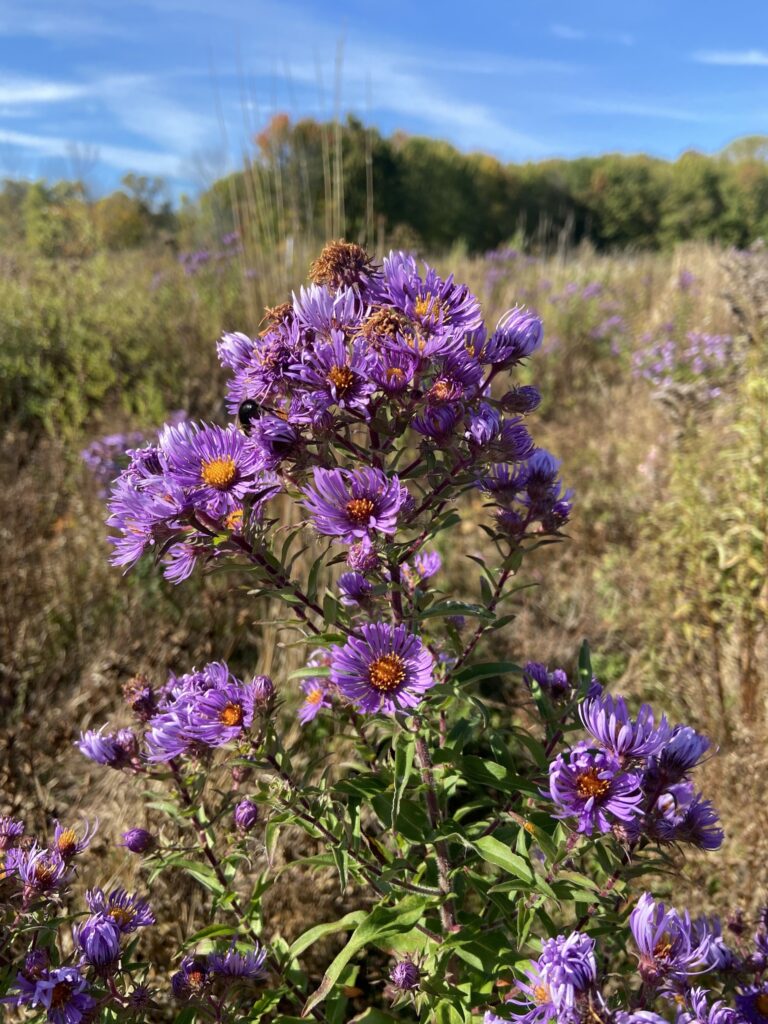
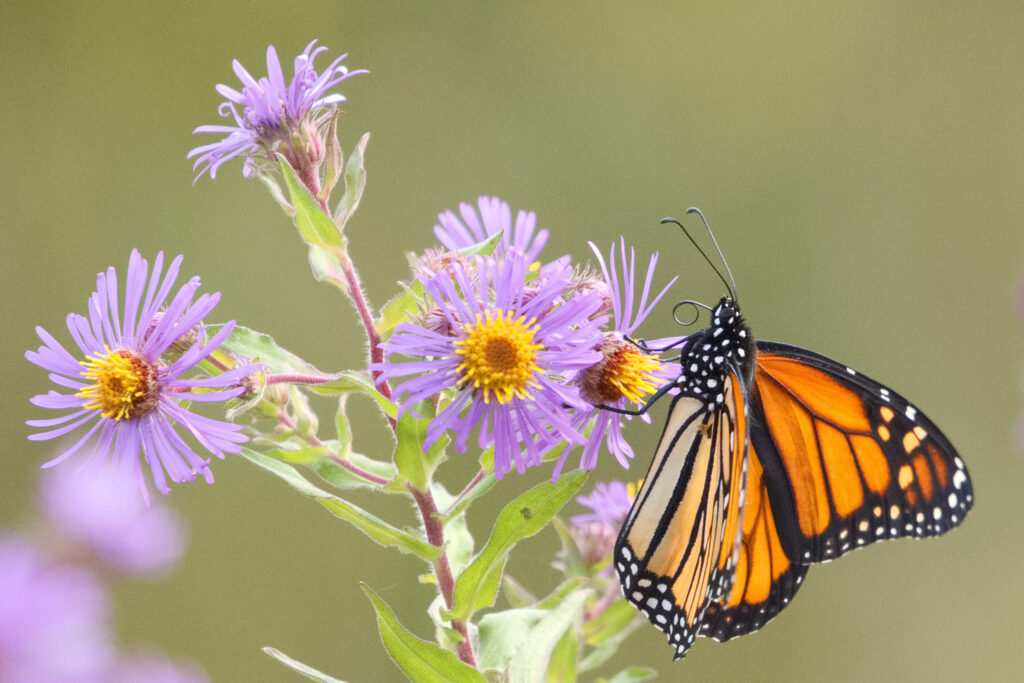
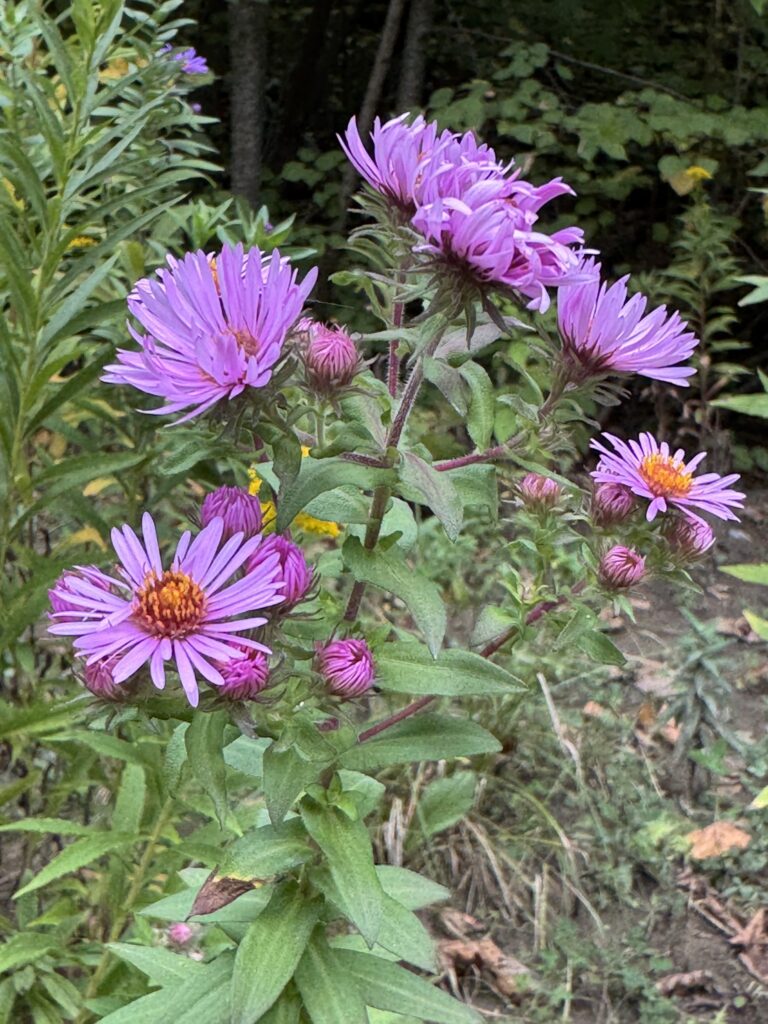
New England aster ends the growing season with a burst of purple stars.
This tall member of the daisy family is native to eastern North America, where it grows in prairies, meadows, thickets, low valleys and along stream banks. [1a] Its bushy clumps can reach 3 to 6 feet tall. [1b] From late summer into fall it carries many 1.5-inch flowers, each with up to 100 purple rays around nearly as many yellow disc flowers. [1c]
Gardeners long knew it as Aster novae-angliae; its accepted name today is Symphyotrichum novae-angliae. [2a] Carl Linnaeus first described it in 1753, [2b] and its species name refers to New England. [2c] An old English name, Michaelmas daisy, comes from asters that tend to flower around September 29, the Feast of St. Michael. [2d]
The flowers draw late-summer bees and butterflies, [1d] and songbirds and small mammals eat the seeds. [1e] It belongs in pollinator and native gardens [1f] and also suits rain gardens and the edges of ponds and streams. [1g] Give it full sun and moist, fertile, well-drained soil, including clay loams. [1h] Pinching the stems in spring delays bloom and makes a bushier plant. [1i]
At Lurie Garden in Chicago’s Millennium Park, New England aster blooms from late summer into early fall. [3a]